




Archivio della Scuola Romana
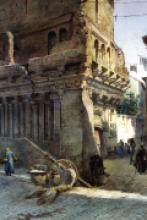
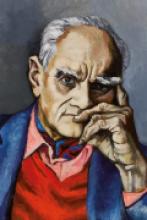
In 1983, a group of intellectuals and artists, including Miriam Mafai, Netta Vespignani, Maurizio Fagiolo dell 'Arco, Antonello Trombadori and Alberto Ziveri, decided to establish the "Archivio della Scuola Romana" association, dedicated to promoting art in Rome between the two world wars. This historical period saw the emergence of different pictorial and sculptural movements, from the "Valori Plastici" (Valori Plastici) to the "Scuola di via Cavour" (School of Via Cavour), from the Tonalism of the 1930s to the last tirbulent phase, between realism and expressionism, during the war years.
Since its first days of life, the archive has enjoyed the active participation of the protagonists of the time who are still alive, including artists, gallery owners, writers, friends and family members who donate documentary materials and, above all, their direct testimony. The heirs have played a really important role, helping to build up a solid archive collection.
Over the years, the initial archive has been expanded thanks to the work of young scholars and researchers, Valerio Rivosecchi, Francesca Romana Morelli, Carolina Marconi and Isabella Montesi, who have extended their research to Italian and foreign libraries and public and private archives, making the association a fundamental point of reference for anyone wishing to study this specific area of art history.
In its twenty-three years of existence, the Archivio della Scuola Romana association has collected nearly 10,000 catalogues, books and monographs, a large number of magazines and specialised publications of the time, correspondence, diaries, photographs and autographs of artists. The cornerstone of the association's activity has been the production of important texts on the period, starting with the fundamental volume Scuola romana, artisti tra le due guerre (Roman School, Artists between the Two Wars), curated by Maurizio Fagiolo dell'Arco (1986), monographs on individual artists, like Alberto Ziveri, Mario Mafai, Antonio Donghi, Scipione, exhibitions in Italy and abroad, such as Scuola Romana (Palazzo Reale, Milan 1988), Roma anni Venti, pittura, scultura, arti applicate (Rome in the 1920s, painting, sculpture, applied arts) Palazzo Rondinini alla Rotonda, Rome 1990, Roma sotto le stelle del ’44 (Rome under the stars of 1944) Palazzo Esposizioni, Rome 1994; Ecole romaine 1925-1945, Pavillon des Arts, Paris 1997, Mario Mafai: Una calma febbre di colori (A calm fever of colours)—Palazzo Venezia, Rome 2004, Casa Mafai, da Via Cavour a Parigi 1925-1933 (Casa Mafai, from Via Cavour to Paris)—Santa Giulia Museum, Brescia 2005.
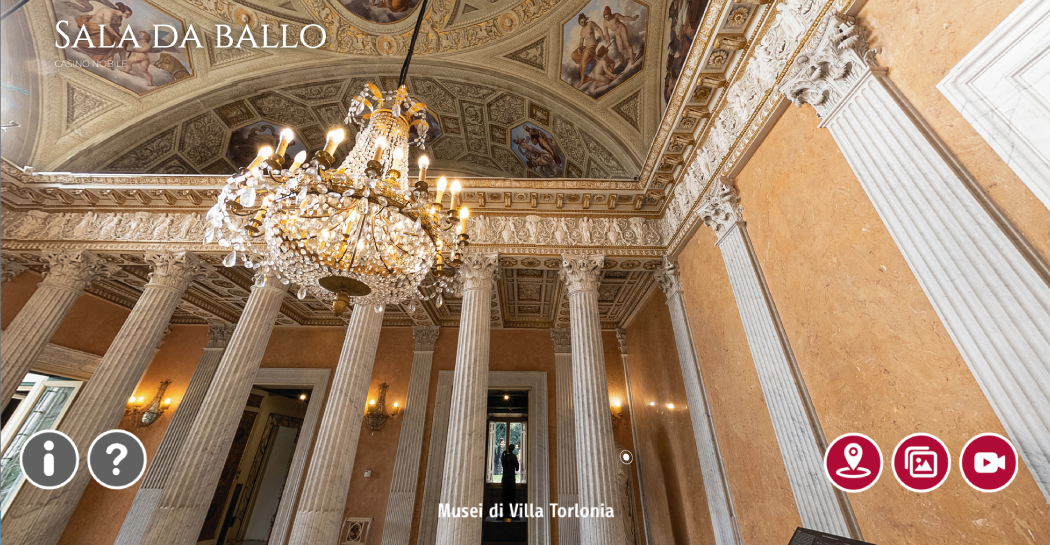
A large part of the historical archive's materials were donated to the city of Rome in 2006 and placed in the Casino dei Principi of Villa Torlonia, forming the new Archivio della Scuola Romana, a public institution available to scholars that also provides scientific support to the activities of the Roman School Museum, located in the nearby Casino Nobile, and in the Casino dei Principi exhibition space. In addition to opening to the public, the association ensures continuity in the cataloguing of acquired and pending bibliographic material, and in the inventorying of archival documents.
Access to the Archivio della Scuola Romana:
Please note that as of February 3, 2026, the consultation service for the library and documents in the Roman school archive is temporarily suspended.
We apologize to scholars for any inconvenience and hope to reactivate the service as soon as possible.